
A collection is the project container for one ECU job. It holds the ECU’s memory sections, the versions of the calibration you are working on, the job metadata, and any comments — all in a single sealed .mtxCol file. The collection panel on the left is where you browse and manage it.

A section is one memory region of the ECU — typically the flash, sometimes a separate EEPROM — carrying a function tag and the bytes for that region. A collection can hold several. In the Memory Sections list you can Add, Edit or Remove a section; the one marked (active section) is the region the editors and the toolbar section picker act on. The panel also shows the maps inside the active section — double-click one to open the map editor.
A version is one variant of the calibration across all sections — the stock read, a stage 1 tune, a customer revision, and so on. Two versions are special:
In the Reference & Versions list you can Add a version (by importing a binary), Edit or Remove one. To see how a tune differs from the reference, compare the two (see comparing & navigating files).
Tip — keep the stock read as the original version and add each tune as a new version. You always have an untouched baseline to compare against and fall back to.
Use the Collections menu (or the toolbar) for New (Ctrl+N), Open (Ctrl+O), Save (Ctrl+S), Save As (Ctrl+Shift+S) and Close (Ctrl+W), with a Recent list for quick reopening. Saving writes a single sealed .mtxCol — self-healing and optionally password-protected (see file security). To get bytes into a collection, import a binary; to get them out, export.
Open the properties editor (Properties, Alt+Enter) to record the job’s metadata, grouped into Client, Vehicle, ECU, Engine, Output (PS/HP and kW) and Project (type and a free-text comment). Fill empty fields from ECU analysis populates what it can from the detected ECU.

Note — this metadata is not just for reference: it feeds the export filename placeholders and helps the online search features identify a file. The more you fill in, the more the rest of the app can do for you.
You can attach comments to a specific region of a version — each with a title, body text and author — shown as a coloured overlay on that part of the binary. They are a handy way to record what a change does or why.
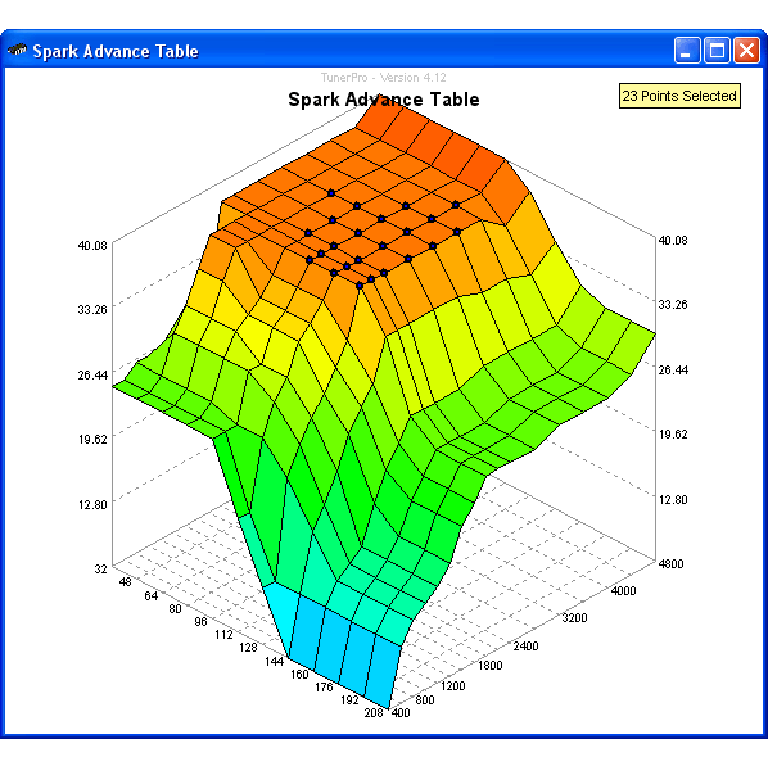
A free collection of checksum correction plugins for TunerPro that ensures safe ECU tuning. Automatically verify and update file checksums for reliable vehicle performance.
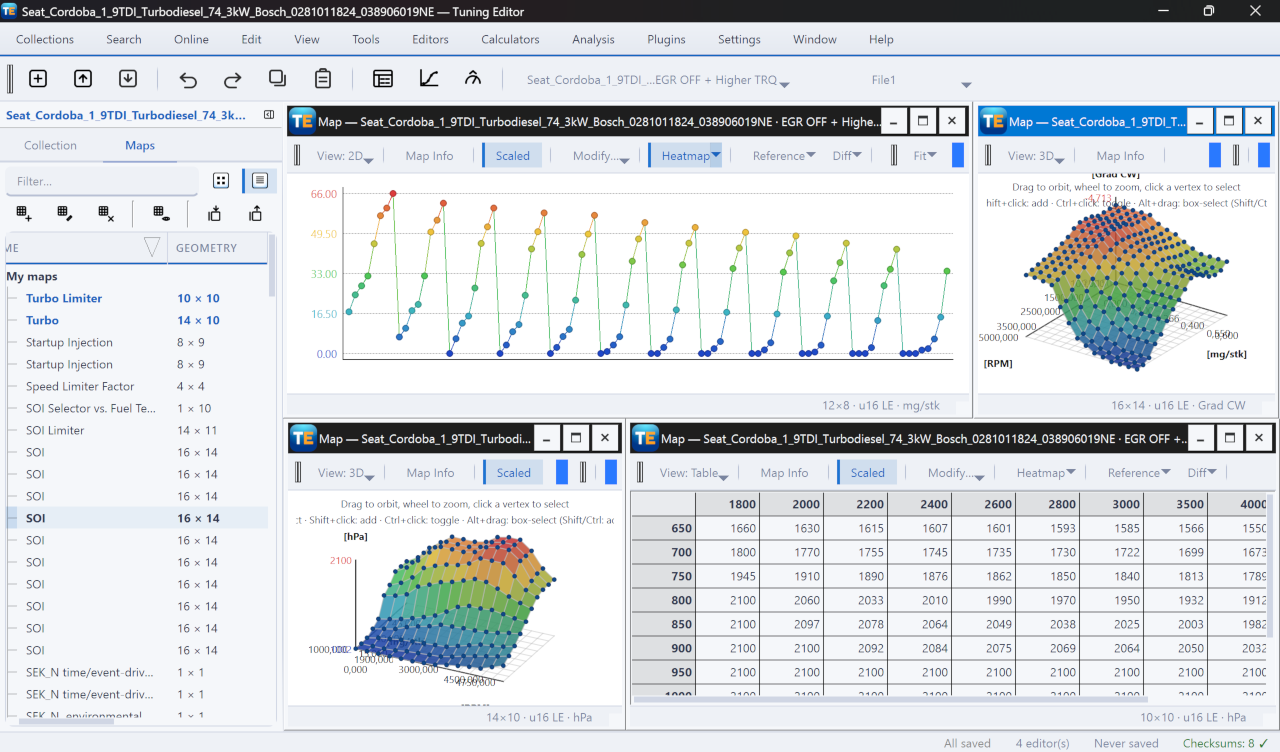
A free, modern Windows software for viewing and editing ECU calibration data - map and hex editors, tuning calculators, and online services.
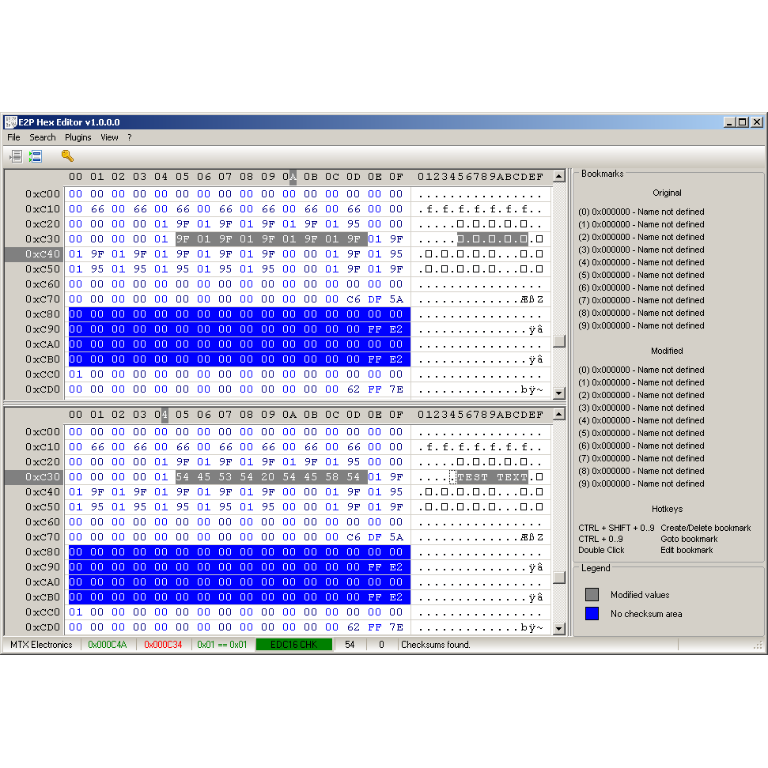
A hex editor built specifically for editing EEPROM data in automotive ECUs. With real-time checksum correction, side-by-side file comparison, and plugin support for automated tasks it's the ultimate tool for professionals.